Cellular and Longevity Compounds
A coenzyme, a peptide directed to the mitochondria, and a redox dye.
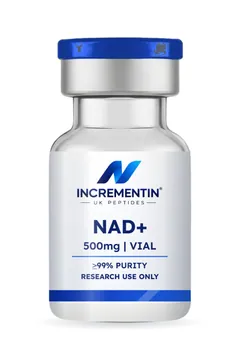
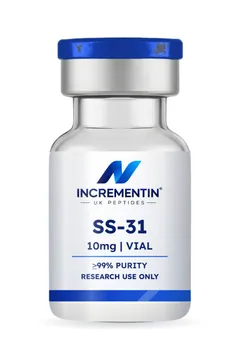

About Cellular and Longevity Compounds
What is on this shelf?
| Compound | What it is | Sizes here |
|---|---|---|
| NAD+ | Nicotinamide adenine dinucleotide. A coenzyme rather than a peptide | 500mg vial |
| SS-31 | Peptide targeted to the mitochondria, also listed as elamipretide | 10mg, 50mg vial |
| Methylene Blue | Synthetic redox-cycling dye | 10mg vial |
What is NAD+?
A dinucleotide, assembled from two nucleotides instead of from amino acids. At 500mg the vial is the biggest single quantity in the range and comes with the lowest rate per milligram.
How should methylene blue be stored?
Highly photosensitive. Keep it away from direct light.
Cellular & Longevity questions
Is NAD+ a peptide?
No. NAD+ is nicotinamide adenine dinucleotide, a coenzyme assembled from two nucleotides. There is no peptide bond in it.
What is the difference between NAD+ and NMN?
NAD+ is the coenzyme itself. NMN is a precursor to it, a separate molecule sitting on the same pathway. We carry NAD+ only.
What else is SS-31 called?
Elamipretide is the non-proprietary name, SS-31 the laboratory designation out of the Szeto-Schiller peptide series, and it has further been listed as MTP-131 and Bendavia. Several names drawn from different points in its development, every one of them the same tetrapeptide.